
Why desert ants make their nest entrances conspicuous
"The animals can learn visual and olfactory cues despite their small brains."


By Stephen Beech via SWNS
Desert ants make their nest entrances conspicuous so they don't get lost on the way home, according to a new study.
They increase the visibility of the way in so it can be found amid the absence of landmarks in the baking sand as they travel up to 2,000 meters from their nests, say scientists.
They explained that if other visual cues are missing, ants build higher nest hills to help foraging nest mates find their way home.
But one in five foraging ants do not make it back in the hostile desert environment, according to the findings published in the journal Current Biology.
The research team from the Max Planck Institute for Chemical Ecology in Germany wanted to find out how desert ants use their "outstanding" navigational skills to find their their way back to their nest as quickly as possible in the extremely hot and barren saltpans of North Africa where they live.
Study lead author Marilia Freire, a doctoral researcher, said: “The desert ant stands out due its remarkable ability to successfully navigate and forage in even the harshest environments, making it an excellent subject for studying the intricacies of navigation.
"With an innate navigation mechanism called path integration, these ants use both a sun compass and a step counter to measure the distances they cover.
"In addition, they possess the ability to learn and utilize visible and olfactory cues.
"We believe that this extremely harsh habitat has led, during evolution, to a navigation system of unsurpassed precision."
The scientists had noted during previous studies in Tunisia that ant nests in the middle of the saltpans, where there are hardly any visible landmarks, had high mounds at the entrances.
In contrast, nest hills near the shrub-covered edges of the saltpans were lower or barely noticeable.
Dr. Markus Knaden said: "It's always hard to tell whether an animal does something on purpose or not.
"The high nest mounds in the middle of the saltpans could have been a side effect of differences in soil structure or wind conditions.
"However, crucial for our study was the idea to remove the mounds and to provide some nests with artificial landmarks and others not, and to observe what would happen,"
The research team followed the ants with a GPS device, allowing them to track the ants on their way to the saltpan and back home.
Freire said: "We observed that desert ants are capable of traveling much greater distances than previously reported.
"The farthest distance a single animal travelled was more than two kilometers.
"However, we also observed an unexpectedly high mortality rate.
"About 20 percent of foraging ants do not find their way back home after extremely long runs and died in front of our eyes, which explains the enormous selection pressure for even better orientation."

She said experiments in which ants could be tracked with particular accuracy during the last few meters to the nest, thanks to a grid painted on the ground, showed that the nest hills are important visual cues.
If they were removed, fewer ants found their way back to the nest, while their nest mates simultaneously began to rebuild nest mounds as quickly as possible.
If, on the other hand, the scientists placed artificial landmarks in the form of small black cylinders near the nest entrances whose mounds they had previously removed, the ants did not invest in building new ones.
Apparently, the cylinders were sufficient for orientation.
Freire explained that ants that go foraging are usually older and more experienced nest members while younger ants are busy building, so there must be some kind of information flow between the two groups.
The research team do not yet know exactly how that is achieved.
Freire said: "One possibility would be that ants in the nest somehow notice that fewer foragers return home, and as a result, hill-building activities at the nest entrance are increased."
Knaden, who has been studying desert ants for 25 years, added: "The animals can learn visual and olfactory cues despite their small brains.
"In addition, they are able to decide which information is useful for their navigation and which is not. All this was already known.
"However, the fact that they even build their own landmarks for orientation and only choose to invest in this work when other environmental cues are missing is quite surprising."
Stories and infographics by ‘Talker Research’ are available & ready to use. Stories and videos by ‘Talker News’ are managed by Talker Inc. For queries, please submit an inquiry via our contact form.





James Bond’s casino chips up for auction for first time
The chips were given to the seller by a member of the crew, who worked on the film, “Diamonds Are...


‘Left for dead’ after being mowed down in e-scooter hit-and-run
“What I find most shocking is the fact the man didn’t even stop to check if I was alright —...


Police hope tattoos could help identify mystery man found dead on beach
Police have been unable to identify the body, and hope the tattoos will help them do so.
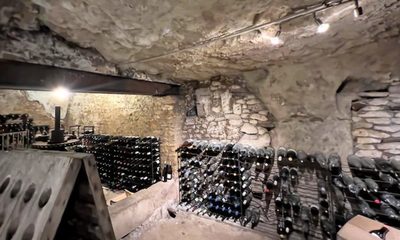

Home with underground wine cave on sale
The caves have electricity, running water, an office and dedicated bottle and wine barrel storage.
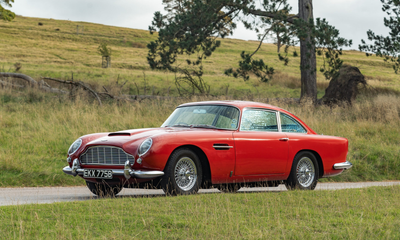

Rare Aston Martin owned by real ‘James Bond’ worth over half a million
It was once owned by P.H. Manners Wood in 1964 — the same year the James Bond movie “Goldfinger” was...

 Tech5 days ago
Shape-shifting bots inspired by elephant trunks can bend and grab

 Sleep3 days ago
Americans feel mentally checked out nearly 2 months a year

 Relationships3 days ago
What is ‘pink noise’ and why do the best talks have it?

 Parenting5 days ago
Kids who go to parks grow up with better mental health?

 Holidays4 days ago
Nearly half of Gen Z skip rent to afford holiday costs

 Travel4 days ago
Study finds how much forgetfulness costs travelers

 Outer Space4 days ago
Deep space system emitting signals every 8 minutes discovered

 Work3 days ago
Do standing desks make you work harder?
