
Experts highlight importance of concussion education in sports
Concussions can alter the way someone thinks, feels and remembers things.


By Mark Waghorn via SWNS
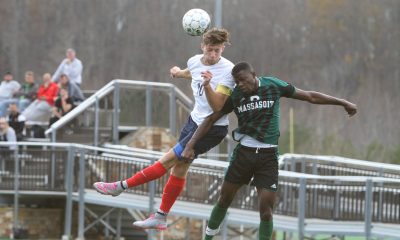
Parents, coaches and athletes should be better educated on dealing with concussions in sports, experts claim.
There should be specific neuromuscular training in warm-ups for the neck and mandatory removal from the field during a game if any concussion is suspected, they recommend.
The new guidance to avoid concussions when taking part in any kind of sport suggests policy or rule changes to minimize collisions.
Key recommendations also include warm-ups with aerobic, balance, strength, agility and neck-specific exercises.
It advises the implementation of laws and protocols, too, such as mandatory removal from the field for suspected cases and medical clearance.
The consensus statement by more than 100 experts notes the "increasing societal concern about possible problems with later in life brain health in former athletes, such as mental health problems, cognitive impairment and neurological diseases."
Studies to date on the links between sports participation in early life and dementia and neurological diseases decades later are limited.
They haven't been able to adjust for a range of potentially highly influential factors.
The international team calls for the setting up of an interdisciplinary working group to guide appropriate research into the potential long-term effects of concussion.
Co-chair Dr. Kathryn Schneider, of Calgary University in Canada, said: “This statement sets out a range of new evidence-based recommendations, including those for concussion prevention as well as new versions of the concussion assessment tools and return to sport and school-learning strategies.
"We encourage clinicians and sports organizations around the globe to adapt these recommendations to their own geographic and cultural environments to optimize the care of athletes who have sustained, or who are at risk of, concussion."

In March, the International Football Association Board (IFAB) rejected the introduction of temporary concussion substitutes, despite fresh calls from the Premier League. But it said the issue is under constant review.
A concussion is a traumatic brain injury affecting mental function. It can alter the way someone thinks, feels and remembers things.
Only about 10 percent of cases result in being knocked out and losing consciousness. Effects are usually temporary, and most people recover fully with rest.
The guidance, based on current scientific evidence, is aimed at optimizing the care of athletes at all levels - from grassroots to professionals.
Strict rest isn't recommended. Light intensity physical activity, such as routine activities of daily living, and aerobic exercise, such as walking and stationary cycling, can aid recovery, as can limiting screen time during the first 48 hours.
For those experiencing dizziness, neck pain or headaches for more than 10 days, the statement recommends rehabilitation and physiotherapy exercises.
Multidisciplinary team assessment is advised for those with symptoms lasting more than four weeks.
Academic support may be needed for some patients in the form of a return to learn strategy.
This can include modified school attendance, limiting screen time, avoiding any contact sports or game play and extra time to complete homework or tests.
Light-intensity activity in the early phases is now recommended, with full sports participation usually occurring within one month of injury.
But it's best to manage athletes on an individual basis, accounting for specific factors that may affect their recovery, such as a history of migraine, anxiety, and social factors.

Studies tracking the mental health of people over time have found former amateur and professional athletes don’t seem to be at heightened risk of depression or suicide later in life.
Similarly, no heightened risk of neurological disease has been reported in amateurs. But some studies of former professional athletes have reported an association between professional football and neurological disease in later life.
There’s limited evidence on the management of sports-related concussions in 5 to 12-year-olds and in para sport athletes, who are known to be at heightened risk of sports-related concussions.
Co-chair Professor Jon Patricios, of Wits University, South Africa, said: "The differentiating aspects of this latest Concussion Consensus are the rigorous methodological process we adopted, the new generation of tools available to clinicians, and the emphasis on the positive impact of exercise and targeted rehabilitation as effective interventions.
"These have the potential to positively change the management of sport-related concussion."
The statement is in the British Journal of Sports Medicine.
The Football Association introduced its own concussion guidelines in 2015. More recently, it said under-12s should not be taught to head balls in training, while in England, the advice in the adult game is fewer than 10 "maximum-force" headers in practice each week.
Stories and infographics by ‘Talker Research’ are available & ready to use. Stories and videos by ‘Talker News’ are managed by Talker Inc. For queries, please submit an inquiry via our contact form.













Are Advent calendars really worth it?
Advent calendars have taken social media by storm this holiday season.


What is ‘pink noise’ and why do the best talks have it?
Scientists at Dartmouth College reveal that "pink noise" may be the answer to making your conversations better.


Thief caught after aping off with stolen orangutan
The stolen orangutan statue was valued at more than $1,000.


Do standing desks make you work harder?
Time to take a stand for or against standing desks?


Droughts so bad parts prepare for plans of rotating water cutoffs
Severe drought could see water supplies to households and businesses temporarily put on a rotating basis.

 Tech4 days ago
Shape-shifting bots inspired by elephant trunks can bend and grab

 Parenting4 days ago
Do teens know money better than their parents?

 Sleep2 days ago
Americans feel mentally checked out nearly 2 months a year
- Relationships2 days ago
What is ‘pink noise’ and why do the best talks have it?

 Parenting4 days ago
Kids who go to parks grow up with better mental health?

 Holidays3 days ago
Nearly half of Gen Z skip rent to afford holiday costs

 Travel3 days ago
Study finds how much forgetfulness costs travelers

 Outer Space3 days ago
Deep space system emitting signals every 8 minutes discovered
