
Human-pig hybrid kidneys grown in groundbreaking experiment
The long-term goal is to optimize the technology for human organ transplantation.


By Stephen Beech via SWNS
Hybrid kidneys containing human and pig cells have been grown inside porkers in the latest "Frankenscience" experiment.
They’re also working to generate other human organs in pigs - including the heart and the pancreas.
The long-term goal is to optimize the technology for human organ transplantation.
The kidney breakthrough is the first time that scientists have been able to grow a solid "humanized" organ inside another species,
When transferred into surrogate pig mothers, the Chinese team say the developing kidneys had normal structure and tubule formation after 28 days.
Previous studies have used similar methods to generate human tissues such as blood or skeletal muscle in pigs.
The Guangzhou Institutes of Biomedicine and Health team, whose ground-breaking work was published in the journal Cell Stem Cell, concentrated on kidneys because they are one of the first organs to develop, and they’re also the most commonly transplanted organ.
Senior author Professor Lai Liangxue said: “Rat organs have been produced in mice, and mouse organs have been produced in rats, but previous attempts to grow human organs in pigs have not succeeded.
“Our approach improves the integration of human cells into recipient tissues and allows us to grow human organs in pigs.”

He explained that integrating human stem cells into pig embryos has been a "challenge" because pig cells outcompete human cells and pig and human cells have different physiological needs.
Senior author Professor Guangjin Pan said: “We have been working on mechanisms to overcome the extremely low efficiency in interspecies chimera.
“We identified a couple of critical factors that enhance the formation of interspecies chimera by facilitating cell competition.”
Prof Liangxue explained that the team’s technique depends on three key components.
First, they created a niche within the pig embryo so that the human cells wouldn't have to compete with pig cells by using CRISPR to genetically engineer a single-cell pig embryo so that it was missing two genes that are required for kidney development.
Second, the researchers engineered human pluripotent stem cells - cells that have the potential to develop into any cell type - to make them more amenable to integration and less likely to self-destruct by temporarily shutting down cell death, or apoptosis.
Then, they converted these cells into “naïve” cells resembling early human embryonic cells by culturing them in a special medium.
Thirdly, before implanting the developing embryos in surrogate sows, the researchers grew the "chimeras" in conditions that were optimized to provide unique nutrients and signals to both the human and pig cells, since these cells usually have disparate needs.
The team transferred a total of 1,820 embryos to 13 surrogate mothers. After either 25 or 28 days, they terminated gestation and extracted the embryos to assess whether the chimeras had successfully produced humanized kidneys.
The researchers collected five embryos for analysis and found that they had structurally normal kidneys for their stage of development and were composed of 50 to 60 percent human cells.
At 25 to 28 days, the kidneys were in the mesonephros - the second - stage of kidney development, and they had formed tubules and buds of cells that would eventually become ureters connecting the kidney to the bladder.
The team also investigated whether human cells were contributing to other tissues throughout the embryos, which could have ethical implications, especially if abundant human cells were found in neural or germline tissues and the pigs were brought to term.
They showed that human cells were mostly localized to the kidneys, whereas the remainder of the embryo was composed of pig cells.

Senior author Professor Zhen Dai said: “We found that if you create a niche in the pig embryo, then the human cells naturally go into these spaces.
“We saw only very few human neural cells in the brain and spinal cord and no human cells in the genital ridge, indicating that the human pluripotent stem cells did not differentiate into germ cells.”
Now they've optimized conditions for growing humanized kidneys, the Chinese scientists want to allow the kidneys to develop for a longer duration.
The long-term aim is to develop the technology for human organ transplantation, but the researchers acknowledge the work will be complex and could take many years.
They say growing a fully functional humanized organ in a pig would require extra steps because organs are composed of multiple types of cells and tissues.
In the study, the researchers created a niche for only one subset of cells, which meant that the kidneys had pig-derived vascular cells, and that could cause organ rejection if they were used in a transplant scenario.
Study senior author Dr. Miguel Esteban said: “Because organs are not composed of just one cell lineage, in order to have an organ where everything comes from the human, we would probably need to engineer the pigs in a much more complex way and that also brings some additional challenges."
He added: “Before we get to that late state of making organs that can be on the shelf for clinical practice, this method provides a window for studying human development.
“You can trace the human cells you’re injecting and manipulate them so that you can study diseases and how cell lineages are formed.”
Stories and infographics by ‘Talker Research’ are available & ready to use. Stories and videos by ‘Talker News’ are managed by Talker Inc. For queries, please submit an inquiry via our contact form.


Plan to find potholes with AI draws jeers online
Social media users were less than impressed with the plans.
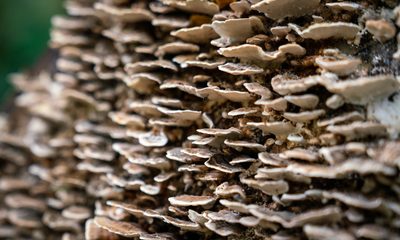

Experts predict ‘spectacular’ mushroom season
Experts suggest species will fruit “prolifically” once autumn rainfall becomes more established and moisture returns to the soil.


Spring or fall? Plants ‘confused’ after record hot summer
Some plants had effectively paused during the heat and are now responding to wetter weather with fresh growth.


Sewage sickness? Reports of illness after dips in UK waters climb
Between January and August this year, 1,687 people reported they got sick after using the water at rivers, lakes and...


Can your favorite music help reduce pain?
Scientists found playing patients’ preferred tunes before a typical procedure before an MRI minimized pain and stress.

 Animals5 days ago
Do owners who share beds with their dogs sleep more soundly?

 Tech3 days ago
Simple formula could predict when AI chatbots will go ‘rogue’

 Outer Space5 days ago
NASA reveals ‘cauldron of cosmic creation’ in stunning new images

 Tech5 days ago
Why nearly 3 in 5 agree brands must disclose AI use

 Life5 days ago
Billionaire wins approval for 40-acre solar farm at historic estate

 Animals4 days ago
Giant tortoise population thriving as 180,000 found on one island

 Animals4 days ago
What is keeping the world’s oldest tortoise going at 194?

 Science4 days ago
Battery-free future? Mesh grown with human cells makes its own power
