
Scientists offer advice on how to spot greenwashing
Scientists are warning the public to be vigilant of unfounded claims and to scrutinize organizations on their green credentials.


By James Gamble via SWNS
People should be wary of unfounded green credentials of companies whose greenwashing poses a direct threat to the environment, scientists have warned.
Researchers argue the pursuit of a world where environmental decline halts and biodiversity outcomes improve is damaged by deceptive publicity produced by companies to present an environmentally responsible image.
The Australian academics behind the foreboding report warned the public to be vigilant of unfounded claims and to scrutinize organizations on their green credentials.
Professor Martine Maron, from the University of Queensland in northeastern Australia, believes the concept of nature positive is essential to stopping the world’s current mass extinction event.
Nature positive – often seen as the biodiversity equivalent of a ‘net zero’ climate goal – depicts a planet where nature improves across the globe, going beyond current efforts that largely focus on mitigating harm.
Maron, who led the research, says that though it's positive that countries are now beginning to back the concept, there is a danger the ambitious plans could be waylaid by greenwashing.
"Countries around the world are starting to back the concept – more than 90 world leaders have signed on to the Leaders’ Pledge for Nature calling for a nature-positive future by 2030," Maron said.
“And 11 of the global Fortune 100 companies already aspire to contribute to nature positive.
"This is fantastic news, but these laudable ambitions mustn’t be sidelined by a well-known enemy of the environmental movement: greenwash."

The term greenwash refers to the deceitful method of organizations spending more time and money on marketing themselves as being environmentally friendly than on actually minimizing their environmental impact.
Professor E.J. Milner-Gulland, from the University of Oxford, encourages constant scrutiny of companies purporting to be environmentally friendly.
She explained: "Our message to the public is that it’s incredibly important to scrutinize these claims.
“As with the term "net zero," you’ll soon start to see the businesses you buy from and the governments you vote for making claims that they are being, doing, or contributing to nature positively.
"But, to be clear, such an achievement is only possible if we fundamentally change how we run our society and economy
"What we really need are standards, so that it’s clear what constitutes misleading information and transparency so that consumers and voters can tell the greenwash from the genuine efforts for change."
Australia is currently framing its national environmental law reforms around the concept of nature positive, but Maron says the country still has a long way to go before it can confidently use the label to describe itself.
"For these initiatives to truly achieve that goal, they’ll need to be substantial and far-reaching, preventing the accumulation of further impacts, especially on our threatened biodiversity,” she said.
“Hundreds of thousands of hectares of habitat are still being cleared in Australia every year, so we still have a long way to go before we can say we’re nature positive."
The research was published in the journal Nature Ecology & Evolution.
Stories and infographics by ‘Talker Research’ are available & ready to use. Stories and videos by ‘Talker News’ are managed by Talker Inc. For queries, please submit an inquiry via our contact form.


Pub sells pints at 1826 prices to celebrate 200th birthday
The London pub is selling pints of beer at 3 cents.

New sensor can detect ‘silent’ heart damage after surgery
The tiny device has been designed to spot hidden heart injuries in patients days after going under the knife.

Is extreme summer heat deadly for people with heart problems?
Analysis of health records from more than 60,000 cardiovascular patients may have the answer.


Clifftop home demolished before it can fall into sea
The property had been designated as an “immediate risk” of plunging into the sea in Trimingham, Norfolk.


Icy replica of a water lily leaf wins Nature Photographer of the Year
This year’s competition received a record-breaking 27,108 entries from photographers in more than 96 countries.

 Holidays2 days ago
Why the holidays would fall apart without eldest daughters
 Pets2 days ago
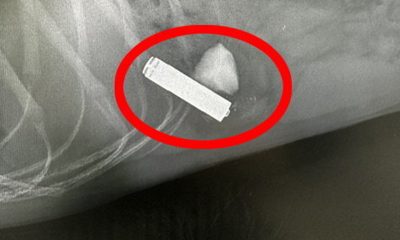
Dog has emergency surgery after eating battery mistaken for treat

 Tech1 day ago
Nearly half of AI users let chatbots change their minds

 Health2 days ago
What caregivers should know about this common heart issue
 Life2 days ago
‘Left for dead’ after being mowed down in e-scooter hit-and-run

 Auctions2 days ago
Rare Aston Martin owned by real ‘James Bond’ worth over half a million

 Holidays1 day ago
Holiday hustle threatens Americans’ hopes for rest

 Holidays7 hours ago
No. 1 threat that could ruin a holiday road trip?
