
Tiny frog may be key to hundreds of species surviving climate change
Puddle frogs show that this is "essential" for animals to live through global warming


By Stephen Beech via SWNS
A tiny frog may be the key to hundreds of species surviving climate change, suggests a new study.
Puddle frogs show that protecting genetic variation is "essential" for animals to live through global warming, say scientists.
Researchers studied the species, that live in tropical wetlands, to identify genetic variation "hotspots" and places where changes in climate could wipe out populations too similar to adapt.
By analyzing the DNA of puddle frogs living in central African rainforests, the team found that areas of high environmental variation foster high genetic variation.
Scientists warned that if those varied habitats and the frogs that live there are lost, genetic variants that could have allowed the species to evolve to survive the climate crisis could be lost too.
And populations with low genetic variation could become extinct very quickly, as they are unable to adapt.
Study lead author Dr. Courtney Miller, of the University of New Orleans, said: “Generally, the more genomic variation within a population, the more likely they will be able to respond to changes in their environment, such as future climate change."

Second author Dr. Geraud Tasse Taboue of the University of Buea, Cameroon, said: “We wanted to identify drivers of genomic variation and how populations might respond to future climate change."
The research team said that if animals can’t find suitable habitats amid soaring global temperatures, they will need to adapt, either by evolving or by making behavioral changes.
The more genetic diversity in a species, the more likely it can successfully evolve to survive.
The tropical forests of the Gulf of Guinea and the Congo Basin are predicted to be particularly seriously affected by climate change. The forests are also biodiversity hotspots.
The researchers explained that a widespread species such as puddle frogs make an "ideal" model for unraveling the impact of those factors on genetic variation, which is critical to understanding species’ genomic vulnerability - how likely it is that they will be able to adapt evolutionarily to climate change.
Scientists sampled 191 frogs across several different locations and habitats, extracting DNA and mapping the occurrence of different variants.
The team then used environmental variables linked to the frogs’ biology and behavior to map differences between their habitats: the annual temperature and rainfall and how much those varied across the year, and the amount of rain in the coldest quarter of the year.
They used projections of how those variables will alter with climate change to model the frogs’ future habitat.
They also used models of the past climate to understand how habitat availability in the Pleistocene period could affect present-day variation.
Combining the data and analyzing it with specialized statistical methods allowed the team to identify the most important forces in driving the puddle frogs’ genetic variation and to determine areas where the frogs would be more genomically vulnerable.

Their findings, published in the journal Frontiers in Conservation Science, showed that puddle frogs' genetic variation was influenced by the distance between sites but primarily predicted by their environment.
The research team said seasonal patterns of precipitation were "particularly influential".
They added that landscapes with multiple types of habitat in close proximity also overlapped with areas of high genetic variation.
Dr. Miller said: “Variation in precipitation is the main factor in environmentally-associated genomic variation for this frog."
She added: “Frogs that occur within the Cameroonian highlands, the forest-savanna ecotone of south-central Cameroon, across the equator, and from the coast to the interior of Gabon may be more likely to keep pace with future climate change.”
The research team also identified several areas where frog populations may not have enough genetic variation to be able to adapt to "abrupt" habitat changes, including southwest Gabon.
They say that their findings, and similar research on different species, could be useful for planning conservation interventions.
Dr. Tasse Taboue added: "Conservation efforts could focus on preserving areas with high genomic variation, under the assumption that these areas harbor individuals that may be more likely to persist given environmental change.”
Stories and infographics by ‘Talker Research’ are available & ready to use. Stories and videos by ‘Talker News’ are managed by Talker Inc. For queries, please submit an inquiry via our contact form.





Seis de cada 10 estadounidenses consideran que 2026 ha sido ‘agotador’
Los estadounidenses han encontrado 2026 agotador, literalmente. Una encuesta de 2.000 estadounidenses reveló que el 63% considera que 2026 ha...


Pub sells pints at 1826 prices to celebrate 200th birthday
The London pub is selling pints of beer at 3 cents.

New sensor can detect ‘silent’ heart damage after surgery
The tiny device has been designed to spot hidden heart injuries in patients days after going under the knife.

Is extreme summer heat deadly for people with heart problems?
Analysis of health records from more than 60,000 cardiovascular patients may have the answer.
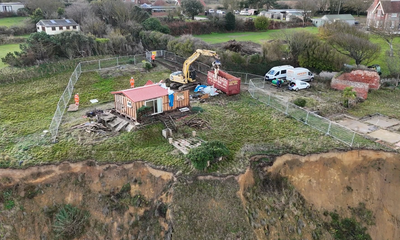

Clifftop home demolished before it can fall into sea
The property had been designated as an “immediate risk” of plunging into the sea in Trimingham, Norfolk.

 Holidays3 days ago
Why the holidays would fall apart without eldest daughters
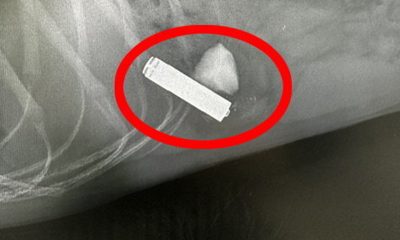
 Pets2 days ago
Dog has emergency surgery after eating battery mistaken for treat

 Tech2 days ago
Nearly half of AI users let chatbots change their minds

 Health3 days ago
What caregivers should know about this common heart issue
 Life2 days ago
‘Left for dead’ after being mowed down in e-scooter hit-and-run

 Holidays2 days ago
Holiday hustle threatens Americans’ hopes for rest

 Auctions2 days ago
Rare Aston Martin owned by real ‘James Bond’ worth over half a million
 Holidays14 hours ago
No. 1 threat that could ruin a holiday road trip?
