
AI reveals Antarctic ice shelves melting faster than thought
The findings could have profound implications for ice shelf stability and sea level rise.


By Stephen Beech via SWNS
Antarctic ice shelves hold twice as much meltwater as previously thought, according to new research.
The findings could have profound implications for ice shelf stability and sea level rise, say scientists.
They explained that slush – water-soaked snow – makes up more than half of all meltwater on the Antarctic ice shelves during the height of summer, but is poorly accounted for in regional climate models.
A team led by Cambridge University researchers used artificial intelligence techniques to map slush on Antarctic ice shelves.
Their findings, published in the journal Nature Geoscience, show that 57% of all meltwater is held in the form of slush, with the remaining amount in surface ponds and lakes.
As the climate warms, more meltwater is formed on the surface of ice shelves, the floating ice surrounding Antarctica which acts as a buttress against glacier ice from inland.
Increased meltwater can lead to ice shelf instability or collapse, which in turn leads to sea level rise.
The researchers also found that slush and pooled meltwater lead to 2.8 times more meltwater formation than predicted by standard climate models since it absorbs more heat from the sun than ice or snow.
Each summer as the weather warms, water pools on the surfaces of Antarctica’s floating ice shelves.
Previous research has shown that surface meltwater lakes can contribute to ice shelf fracture and collapse, as the weight of the water can cause the ice to bend or break.
However, scientists say the role of slush in ice shelf stability is more difficult to determine.

Study lead author Dr. Rebecca Dell, of Cambridge’s Scott Polar Research Institute (SPRI), said: “We can use satellite imagery to map meltwater lakes across much of Antarctica, but it’s hard to map slush because it looks like other things, such as shadows from clouds when viewed from a satellite.
“But using machine learning techniques, we can go beyond what the human eye can see and get a clearer picture of how slush might be affecting ice in Antarctica.”
Using optical data from NASA’s Landsat 8 satellite, the Cambridge researchers, working with scientists from the University of Colorado Boulder and Delft University of Technology in the Netherlands, trained a machine learning model to obtain monthly records of slush and meltwater lakes across 57 Antarctic ice shelves between 2013 and 2021.
Dr. Dell said: “Machine learning allows us to use more information from the satellite, since it can work with more wavelengths of light than the human eye can see.
“This allows us to determine what is and isn’t slush, and then we can train the machine learning model to quickly identify it across the whole continent.”
Co-author Professor Ian Willis, also of SPRI, said: “We’re interested in learning how much slush is present during the Antarctic summer, and how it’s changed over time."
Using the AI model, the researchers found that in the peak of the Antarctic summer in January, 57% of all meltwater on Antarctica’s ice shelves is held in slush, with the remaining 43% in meltwater lakes.
Dr. Dell said: “This slush has never been mapped on a large scale across all of Antarctica’s large ice shelves, so over half of all surface meltwater has been ignored until now.
“This is potentially significant for the hydrofracture process, where the weight of meltwater can create or enlarge fractures in the ice.”
The researchers explained that meltwater affects the stability of the floating ice shelves that fringe the Antarctic coastline.
As the climate warms and melt rates in Antarctica increase, meltwater – whether in the form of lakes or slush – can get into cracks on the ice, causing the cracks to get bigger.
That can cause fractures in the ice shelf, and could cause vulnerable ice shelves to collapse, which in turn would allow inland glacier ice to spill into the ocean and contribute to rising sea levels.

Willis said: “Since slush is more solid than meltwater, it won’t cause hydrofracture in the same way that water from a lake does, but it’s definitely something we need to consider when attempting to predict how or whether ice shelves will collapse."
The research team said that slush can also have a big effect on melt rates. As slush and lakes are less white than snow or ice, they absorb more heat from the sun, causing more snowmelt.
The extra melt is currently unaccounted for in climate models, which may lead to underestimates in projections of ice sheet melting and ice shelf stability.
Dr. Dell said: “I was surprised that this meltwater was so poorly accounted for in climate models.
“Our job as scientists is to reduce uncertainty, so we always want to improve our models so they are as accurate as possible.”
Willis added: “In the future, it’s likely that places in Antarctica that currently don’t have any water or slush will start to change.
“As the climate continues to warm, more melting will occur, which could have implications for ice stability and sea level rise.”
Stories and infographics by ‘Talker Research’ are available & ready to use. Stories and videos by ‘Talker News’ are managed by Talker Inc. For queries, please submit an inquiry via our contact form.




Cómo los amigos que saben de finanzas pueden ahorrarte mucho dinero
Tener un amigo que sepa de finanzas te ahorra unos $500 al año, según una nueva encuesta. La encuesta de...


7 de cada 10 trabajadores temporales temen la temporada navideña este año
Los trabajadores temporales dependen de empleos estacionales para llegar a fin de mes esta temporada navideña, según una nueva encuesta....


Encuesta revela el 56% quiere saber cuándo una marca usa IA
La mayoría de las personas (66%) se sienten cómodas usando IA en su vida personal y profesional, pero todavía hay...
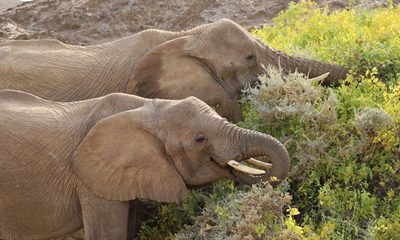

Circle of life? Elephant remains draw grazing animals for years
Scientists discovered that the location where one of the iconic mammals dies becomes a “nutrient hot spot.”


Postcard signed by all four Beatles to fetch thousands at auction
All four of the Fab Four's signatures are on the postcard.

 Tech4 days ago
Simple formula could predict when AI chatbots will go ‘rogue’
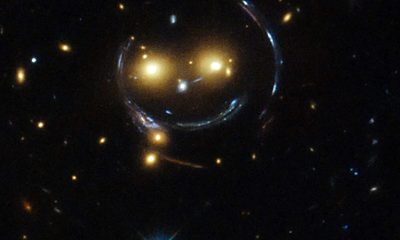
 Outer Space17 hours ago
NASA shares stupendous ‘smiling’ galaxy clusters

 Money18 hours ago
How financially savvy friends can save you tons of cash

 Animals5 days ago
What is keeping the world’s oldest tortoise going at 194?

 Animals5 days ago
Giant tortoise population thriving as 180,000 found on one island
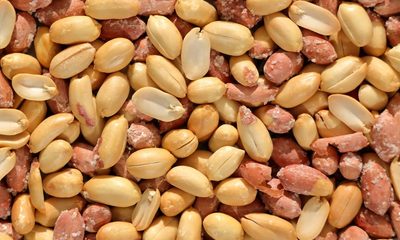
 Health18 hours ago
Can eating a pack of peanuts daily help improve your memory?

 Science5 days ago
Battery-free future? Mesh grown with cells makes its own power

 Science5 days ago
Signal from space provides new insight into early universe
