
New blood test can predict how long vaccine immunity will last
The effectiveness of the flu vaccine, usually given in October, starts to wane by the following spring.


By Stephen Beech
A new blood test can predict how long vaccine immunity will last.
The revolutionary breakthrough will help to create more effective jabs, say scientists.
They explained that when children receive their second measles-mumps-rubella (MMR) vaccine, they gain protection against all three viruses for all or most of their lives.
But the effectiveness of a flu vaccine given in October starts to wane by the following spring.
Scientists have previously been unable to work out why some vaccines can coax the body to produce antibodies for decades, while others last only a few months.
Now, a study led by researchers at Stanford University School of Medicine in the United States, has shown that variation in vaccine durability can, in part, be pinned on a surprising type of blood cell called megakaryocytes, typically implicated in blood clotting.
Senior author Dr. Bali Pulendran said: “The question of why some vaccines induce durable immunity while others do not has been one of the great mysteries in vaccine science.
“Our study defines a molecular signature in the blood, induced within a few days of vaccination, that predicts the durability of vaccine responses and provides insights into the fundamental mechanisms underlying vaccine durability.”
In a 2022 study, Dr. Pulendran and his colleagues defined a “universal signature” that could predict an early antibody response to many vaccines.
But that did not define a signature that could predict how long antibody responses would last.
For the new study, published in the journal Nature Immunology, Dr. Pulendran’s team initially looked at an experimental H5N1 bird flu vaccine given with an adjuvant — a chemical mixture that enhances the immune response to an antigen but, on its own, does not induce an immune response.
The researchers followed 50 healthy volunteers who received either two doses of the bird flu vaccine with the adjuvant or two doses without the adjuvant.
They collected blood samples from each volunteer a dozen times over the first 100 days after vaccination and carried out in-depth analyses of the genes, proteins and antibodies in each sample.

They then used a machine-learning program to evaluate - and find patterns within - the resulting dataset.
The program identified a molecular signature in the blood in the days following vaccination that was associated with the strength of a person’s antibody response months later.
The signature was mostly reflected in tiny bits of RNA within platelets - small cells that form clots in the blood.
Platelets are derived from megakaryocytes, cells found in the bone marrow.
The team explained that platelets, when they break off megakaryocytes and enter the bloodstream, often take small pieces of RNA from the megakaryocytes with them.
While researchers can’t easily track the activity of megakaryocytes, they say platelets carrying RNA from megakaryocytes act as "proxies".
Dr. Pulendran said: “What we learned was that the platelets are a bellwether for what is happening with megakaryocytes in the bone marrow."
To confirm whether megakaryocytes were affecting vaccine durability, Dr. Puledran’s team simultaneously gave mice the bird flu vaccine and thrombopoietin, a drug that boosts the number of activated megakaryocytes in the bone marrow.
They found that thrombopoetin led to a six-fold increase in levels of anti-bird flu antibodies two months later.
Further experiments showed that activated megakaryocytes produce key molecules that increase the survival of the bone marrow cells responsible for making antibodies, or plasma cells.
When the molecules were blocked, plasma cells survived less in the presence of megakaryocytes.
Dr. Pulendran said: “Our hypothesis is that megakaryocytes are providing this nurturing, pro-survival environment in the bone marrow for plasma cells."
The team tested whether the trend held true for other vaccine types.

They looked at previously collected data on the responses of 244 people to seven different vaccines - including jabs against seasonal flu, yellow fever, malaria and Covid-19.
The same platelet RNA molecules - signs of megakaryocyte activation - were associated with longer-lasting antibody production for the various vaccines.
The molecular signature could predict which vaccines lasted longer, as well as which vaccine recipients would have a longer-lasting response.
Now, Dr. Pulendran and his colleagues plan to conduct studies that probe why some vaccines might spur higher levels of megakaryocyte activation in the first place.
They say those findings could help researchers develop vaccines that more effectively activate megakaryocytes and lead to more durable antibody responses.
In the meantime, the team want to develop tests to determine, using their newly discovered molecular signature, how long a vaccine is likely to last.
They say that could help speed up vaccine clinical trials - in which researchers often must follow people for months or years to determine durability - but also could yield personalized vaccine plans.
Dr. Pulendran added: “We could develop a simple PCR assay - a vaccine chip - that measures gene expression levels in the blood just a few days after someone is vaccinated.
“This could help us identify who may need a booster and when.”
He says that the length of time a vaccine response lasts is probably affected by several "complex" factors, and he suspects that megakaryocytes are just "one piece of the larger story."
Stories and infographics by ‘Talker Research’ are available & ready to use. Stories and videos by ‘Talker News’ are managed by Talker Inc. For queries, please submit an inquiry via our contact form.


Man travels 1,300 miles to fish and catches ‘world record’ carp
The fisherman was left stunned when the giant carp took his bait.


Queen Elizabeth II’s hanky and Wallis Simpson’s toothpick for sale
The cotton handkerchief made for the then-Princess Elizabeth in the late 1940s is expected to fetch up to $670.
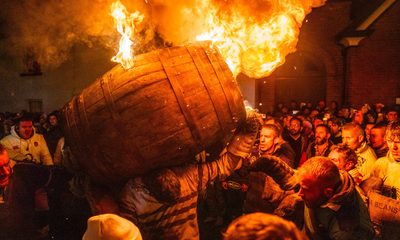

Fiery tradition has people carry burning tar barrels through streets
This flaming historic tradition is a blazing barrel spectacle.


Scientist fighting to keep badger he saved from starvation
“I just want the right decision made for Harriet.”


Beavers return to part of Scotland for first time in 500 years
Beavers are back in the famous part of Scotland 500 years after they were hunted to extinction.

 Studies5 days ago
Is living near too much noise bad for you?

 Food & Drink5 days ago
Energy drinks linked to serious heart issues in young adults

 Entertainment5 days ago
Original 1966 Batman No. 1 trading card sells for record price

 Holidays5 days ago
How are Americans giving holiday traditions makeovers?

 Money3 days ago
Six in 10 keep secret money from their partners

 Life2 days ago
Is the ‘morning debrief’ more essential than the night out?

 Weird4 days ago
Man who studied Loch Ness Monster for 50 years: It doesn’t exist

 Good News4 days ago
Adventurer ends 28-year walk around the world
