
Research reveals younger people most likely to remember their dreams
Italian scientists say the ability to recall dreams seems to be based both on individual characteristics and external factors.


By Stephen Beech
Young people and those who experience longer periods of light sleep are most likely to remember their dreams, according to a new study.
But older people are more likely to experience "white dreams" - a sensation of having dreamt without recalling any details, say scientists.
An Italian research team studying what makes us remember our dreams also found seasonal variations, with participants reporting lower dream recall during winter compared to Spring.
They say the ability to recall dreams seems to be based both on individual characteristics and external factors.
Some people wake up vividly recalling their dreams from the night before, and can even tell precise stories experienced during the night, while others struggle to remember even a single detail.
The new study, led by researchers at the IMT School for Advanced Studies Lucca, explores the factors that influence "dream recall" - the ability to remember dreams upon awakening- and uncovers which individual traits and sleep patterns shape the phenomenon.

The reason why there is such a difference in recalling dreams has remained a mystery.
Some previous studies found that women, younger people, or those with a tendency to daydream usually better recall night dreams.
However, other studies did not confirm those findings.
During the COVID-19 pandemic, the phenomenon of individual differences in morning dream recall attracted renewed public and scientific attention when a surge in morning dream recall was reported worldwide.
The new study, published in the journal Communications Psychology, was conducted from 2020 to 2024 and involved more than 200 participants, aged 18 to 70.

They recorded their dreams daily for 15 days while their sleep and cognitive data were tracked using wearable devices and psychometric tests.
Each study participant was given a voice recorder to report, every day right after waking up, about the experiences they had during sleep.
The participants had to report whether they remembered having dreamed or not if they had the impression of having dreamed but did not remember anything about the experience, and to describe the content of the dream if they were able to remember it.
For the duration of the study, participants also wore an actigraph, a sleep-monitoring wristwatch that detects sleep duration, efficiency, and disturbances.

At the beginning and end of the dream recording period, the participants were subjected to psychological tests and questionnaires that measured factors including anxiety levels and proneness to mind-wandering.
The research team found that dream recall, defined as the probability of waking up in the morning with impressions and memories from a dream experience, showed "considerable variability" between participants and was influenced by several factors.
The study revealed that people with a positive attitude toward dreams and a tendency for mind-wandering were "significantly" more likely to recall their dreams.
Sleep patterns also seemed to play a "critical" role with participants who experienced longer periods of light sleep having a greater likelihood of waking with a memory of their dreams.

Study lead author Professor Giulio Bernardi, of the IMT School, said: “Our findings suggest that dream recall is not just a matter of chance but a reflection of how personal attitudes, cognitive traits, and sleep dynamics interact.
“These insights not only deepen our understanding of the mechanisms behind dreaming but also have implications for exploring dreams' role in mental health and in the study of human consciousness.”
Study first author Dr. Valentina Elce, also of the IMT School, said: “Data collected within this project will serve as a reference for future comparisons with clinical populations."
She added: “This will allow us to move forward the research on the pathological alterations of dreaming and their potential prognostic and diagnostic value.”
Stories and infographics by ‘Talker Research’ are available & ready to use. Stories and videos by ‘Talker News’ are managed by Talker Inc. For queries, please submit an inquiry via our contact form.


Man travels 1,300 miles to fish and catches ‘world record’ carp
The fisherman was left stunned when the giant carp took his bait.


Queen Elizabeth II’s hanky and Wallis Simpson’s toothpick for sale
The cotton handkerchief made for the then-Princess Elizabeth in the late 1940s is expected to fetch up to $670.
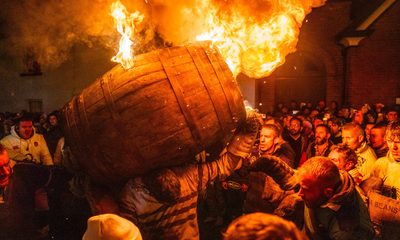

Fiery tradition has people carry burning tar barrels through streets
This flaming historic tradition is a blazing barrel spectacle.


Scientist fighting to keep badger he saved from starvation
“I just want the right decision made for Harriet.”


Beavers return to part of Scotland for first time in 500 years
Beavers are back in the famous part of Scotland 500 years after they were hunted to extinction.

 Studies5 days ago
Is living near too much noise bad for you?

 Food & Drink5 days ago
Energy drinks linked to serious heart issues in young adults

 Entertainment5 days ago
Original 1966 Batman No. 1 trading card sells for record price

 Holidays5 days ago
How are Americans giving holiday traditions makeovers?

 Money3 days ago
Six in 10 keep secret money from their partners

 Life2 days ago
Is the ‘morning debrief’ more essential than the night out?

 Weird5 days ago
Man who studied Loch Ness Monster for 50 years: It doesn’t exist

 Good News4 days ago
Adventurer ends 28-year walk around the world
