
Stress raises stroke risk even in younger adults
Researchers looked at 426 people, aged 18 to 49, who suffered an ischemic stroke with no known cause.


By Stephen Beech
Stress raises the risk of a stroke - even in younger adults, warns new research.
Young women living with chronic stress, in particular, are at greater risk, say scientists.
The study looked at younger adults and found an association between stress and stroke, with no known cause, in female participants, but not male participants.
Study leader Dr. Nicolas Martinez-Majander said: “Younger people often experience stress due to the demands and pressures associated with work, including long hours and job insecurity, as well as financial burdens.
“Previous research has shown that chronic stress can negatively affect physical and mental health.
"Our study found it may increase the risk of stroke in younger women.”
The researchers looked at 426 people, aged 18 to 49, who suffered an ischemic stroke with no known cause.

They were matched for age and sex with 426 people who did not have a stroke.
An ischemic stroke is when blood flow is blocked to part of the brain. It can lead to weakness, difficulty speaking, vision problems and can be fatal.
Participants completed a questionnaire about stress levels over a one-month period.
Those who had a stroke were asked to record stress levels in the month prior to their stroke.
They were asked 10 questions, including “In the last month, how often have you felt that you were unable to control the important things in your life?”
Scores for each question ranged from zero to four, with four meaning “very often.”
A total score up to 13 represented low stress; 14 to 26, moderate stress; and 27 to 40, high stress.
Those who had a stroke had an average score of 13 compared to an average score of 10 for those who hadn't.

People with stroke were more likely to have at least moderate stress levels, according to the findings published by the journal Neurology.
Just under half (46%) of those who had suffered a stroke had moderate or high-stress levels compared to just a third (33%) of those who had not.
After adjusting for factors that could affect the risk of a stroke including alcohol use and blood pressure, the research team found for female participants, moderate stress was associated with a 78% increased risk of stroke and high stress was associated with a 6% increased risk.
Researchers did not find a link between stress and stroke in male participants.
Dr. Martinez-Majander, of Helsinki University Hospital, Finland, said: “More research is needed to understand why women who feel stressed, but not men, may have a higher risk of stroke.”
He added: “In addition, we need to further explore why the risk of stroke in women was higher for moderate stress than high stress.
"Knowing more about how stress plays a role could help us to create better ways to prevent these strokes.”
The research team said that a limitation of the study was that people experiencing higher levels of stress may have been less likely to enroll in the study, which could have affected the results.
Stories and infographics by ‘Talker Research’ are available & ready to use. Stories and videos by ‘Talker News’ are managed by Talker Inc. For queries, please submit an inquiry via our contact form.




Postcard signed by all four Beatles to fetch thousands at auction
All four of the Fab Four's signatures are on the postcard.


NASA shares stupendous ‘smiling’ galaxy clusters
"Aliens have finally discovered emojis."


Doomed spacecraft shares cosmic images before fiery re-entry
Currently located around 200 miles above Earth, NASA says Swift is expected to re-enter Earth's atmosphere later this year, potentially...
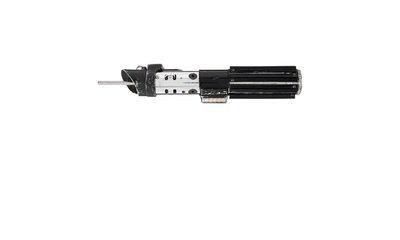

Darth Vader lightsaber expected to top $1M at ‘Star Wars’ auction
An unprecedented 27 lightsabers from iconic characters across the “Star Wars” universe will be offered.


How financially savvy friends can save you tons of cash
Having a financially savvy friend saves you $500 a year, new research reveals. A poll of 2,000 Americans found the...

 Animals5 days ago
Do owners who share beds with their dogs sleep more soundly?

 Tech4 days ago
Simple formula could predict when AI chatbots will go ‘rogue’

 Life5 days ago
Billionaire wins approval for 40-acre solar farm at historic estate
- Money2 hours ago
How financially savvy friends can save you tons of cash

 Animals4 days ago
Giant tortoise population thriving as 180,000 found on one island

 Animals4 days ago
What is keeping the world’s oldest tortoise going at 194?

 Science4 days ago
Signal from space provides new insight into early universe

 Science4 days ago
Battery-free future? Mesh grown with human cells makes its own power
