
Spending time with animals and in nature helps with PTSD
Researchers found that interacting with animals and forest walks helps ease symptoms of the crippling mental health condition.


By Stephen Beech
Going back to nature helps war veterans recover from post-traumatic stress disorder, according to new research.
Researchers found that interacting with animals and forest walks helps ease symptoms of the crippling mental health condition, known as PTSD, in former American soldiers.
The study involving 19 veterans with PTSD or PTSD symptoms showed that activities including walking in forests, assisting with wildlife care in a rehab center, seeing wildlife in a sanctuary, and bird watching improved psychological symptoms, especially reducing anxiety.
Those who took part in the nearly four-month study in Massachusetts were also given bird feeders to help provide a sustainable connection to wildlife once the research – which included observing animals at the Maine Wildlife Park and walking through Harvard Forest – was over.
All the activities included education such as learning about bird identification.
The study findings, published in the journal Human-Animal Interactions, suggest that veterans benefited more from their immersion in wildlife settings – including coming up close with a Sulcata tortoise – than a forest walk.

Dr. Donna Perry, of UMass Chan Medical School in Worcester, Massachusetts, said: “While many studies involving interactions between humans and other species aimed at improving psychological or physical health have involved domestic animals, few have focused on wildlife.
"We found that the response of veterans with PTSD to wildlife immersion suggests improved psychological symptoms as well as connection to nature and increased understanding and concern for animal welfare and conservation-related issues.
“Nature-based interventions are dynamic and require a flexible design, which may be addressed through immersion experiences.”
Dr. Perry said the participants in the study reflected that interactions with wildlife were especially meaningful when animals chose to engage with humans.
One participant said: “I sat on the patio and I saw a red squirrel running by.
"He stopped and looked at me, I thought he was so cute. I really felt connected to him.”

Dr. Perry said that, in some cases, participants seemed to identify with animals, such as one veteran who was assisting in feeding a baby grey squirrel through a syringe.
She added: “The findings also suggest that improvements in depression and well-being may be mediated through transcendent feelings in response to the human-wildlife interactions.
“The study supports that placing veterans in an environment where they can connect with animals that have also undergone loss, and suffering may foster healing in the veterans themselves.
“Being exposed to and assisting with the care of injured wildlife also raises awareness of the effects of humans on the environment and may enhance conservation attitudes.
"This suggests that settings providing wildlife care and public education may be mutually beneficial for both human and beyond-human animals.”
The research team says that future research with larger numbers of participants would be helpful to more deeply explore mutual benefits for humans and animals within specific realms of interaction, such as physical contact through animal care or reminiscing through the extended realm.
Stories and infographics by ‘Talker Research’ are available & ready to use. Stories and videos by ‘Talker News’ are managed by Talker Inc. For queries, please submit an inquiry via our contact form.





Pub sells pints at 1826 prices to celebrate 200th birthday
The London pub is selling pints of beer at 3 cents.

New sensor can detect ‘silent’ heart damage after surgery
The tiny device has been designed to spot hidden heart injuries in patients days after going under the knife.

Is extreme summer heat deadly for people with heart problems?
Analysis of health records from more than 60,000 cardiovascular patients may have the answer.
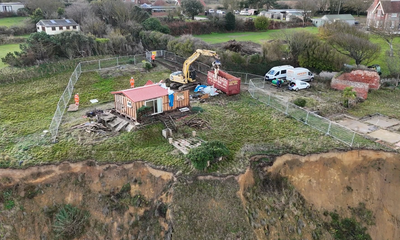

Clifftop home demolished before it can fall into sea
The property had been designated as an “immediate risk” of plunging into the sea in Trimingham, Norfolk.


Icy replica of a water lily leaf wins Nature Photographer of the Year
This year’s competition received a record-breaking 27,108 entries from photographers in more than 96 countries.

 Holidays2 days ago
Why the holidays would fall apart without eldest daughters
 Pets2 days ago
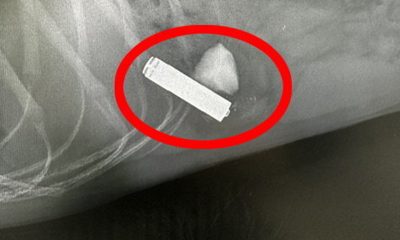
Dog has emergency surgery after eating battery mistaken for treat

 Tech1 day ago
Nearly half of AI users let chatbots change their minds
 Health2 days ago
What caregivers should know about this common heart issue
 Life2 days ago
‘Left for dead’ after being mowed down in e-scooter hit-and-run
 Auctions2 days ago
Rare Aston Martin owned by real ‘James Bond’ worth over half a million

 Holidays1 day ago
Holiday hustle threatens Americans’ hopes for rest
 Holidays7 hours ago
No. 1 threat that could ruin a holiday road trip?
