
Climate change causing sharks to lose their bites
Researchers discovered that as climate change causes seas to become more acidic, sharks’ teeth may become structurally weaker and more prone to breaking.


By Stephen Beech
Sharks may be losing their deadly bite due to climate change, according to a new study.
The apex predators' razor-sharp teeth are being destroyed by ocean acidification, say scientists.
Researchers have discovered that as seas become more acidic, sharks’ teeth may become structurally weaker and more prone to breaking.
It was already known that sharks can famously replace their teeth, with new ones always growing as they’re using up the current set.
Their teeth are key to their survival as they rely on them to catch prey.
But researchers say those feared teeth are built for cutting flesh, not resisting acidity.
And the ability to regrow their teeth might not be enough to ensure sharks can withstand the pressures of a warming world where oceans are getting more acidic, according to the new study published in the journal Frontiers in Marine Science.
Researchers in Germany examined sharks’ teeth under different ocean acidification scenarios and showed that more acidic oceans lead to more brittle and weaker teeth.
Study first author Maximilian Baum, a biologist at Heinrich Heine University (HHU), said: “Shark teeth, despite being composed of highly mineralised phosphates, are still vulnerable to corrosion under future ocean acidification scenarios.

“They are high developed weapons built for cutting flesh, not resisting ocean acid.
"Our results show just how vulnerable even nature’s sharpest weapons can be.”
He explained that ocean acidification is a process during which the ocean’s pH value keeps decreasing, resulting in more acidic water. It is mostly driven by the release of human-generated carbon dioxide.
Currently, the average pH of the world’s oceans is 8.1. In 2300, it is expected to drop to 7.3, making it almost 10 times more acidic than it currently is.
For the new study, researchers used these two pH values to examine the effects of more and less acidic water on the teeth of Blacktip reef sharks.
Divers collected more than 600 discarded teeth from an aquarium housing the sharks.
A total of 16 teeth – those that were completely intact and undamaged – were used for the pH experiment, while 36 more teeth were used to measure before and after.
The teeth were incubated for eight weeks in separate 20-liter tanks.
Compared to the teeth incubated at 8.1 pH, the teeth exposed to more acidic water were significantly more damaged.
Study senior author Professor Sebastian Fraune, also of HHU, said: “We observed visible surface damage such as cracks and holes, increased root corrosion, and structural degradation."
He explained that tooth circumference was also greater at higher pH levels.

Teeth, however, did not actually grow, but the surface structure became more irregular, resulting in it appearing larger on 2D images.
While an altered tooth surface may improve cutting efficiency, Fraune says it potentially also makes teeth structurally weaker and more prone to breaking.
The study only looked at discarded teeth of non-living mineralised tissue, which means repair processes that may happen in living organisms could not be considered.
Fraune said, “In living sharks, the situation may be more complex.
"They could potentially remineralize or replace damaged teeth faster, but the energy costs of this would be probably higher in acidified waters."
He says blacktip reef sharks must swim with their mouths permanently open to be able to breathe, so their teeth are constantly exposed to water.
If the water is too acidic, the teeth automatically take damage, especially if acidification intensifies.

Baum said: “Even moderate drops in pH could affect more sensitive species with slow tooth replication circles or have cumulative impacts over time.
“Maintaining ocean pH near the current average of 8.1 could be critical for the physical integrity of predators’ tools.”
The study only focused on the chemical effects of ocean acidification on non-living tissue.
The researchers say future studies should examine changes to teeth, their chemical structure, and mechanical resilience in live sharks.
But the study shows that microscopic damage might be enough to pose a serious problem for animals depending on their teeth for survival.
Baum said: “It’s a reminder that climate change impacts cascade through entire food webs and ecosystems."
Fraune added, “This study began as a bachelor’s project and grew into a peer-reviewed publication.
"It’s a great example of the potential of student research.
“Curiosity and initiative can spark real scientific discovery.”
Stories and infographics by ‘Talker Research’ are available & ready to use. Stories and videos by ‘Talker News’ are managed by Talker Inc. For queries, please submit an inquiry via our contact form.






Seis de cada 10 estadounidenses consideran que 2026 ha sido ‘agotador’
Los estadounidenses han encontrado 2026 agotador, literalmente. Una encuesta de 2.000 estadounidenses reveló que el 63% considera que 2026 ha...


Pub sells pints at 1826 prices to celebrate 200th birthday
The London pub is selling pints of beer at 3 cents.

New sensor can detect ‘silent’ heart damage after surgery
The tiny device has been designed to spot hidden heart injuries in patients days after going under the knife.

Is extreme summer heat deadly for people with heart problems?
Analysis of health records from more than 60,000 cardiovascular patients may have the answer.
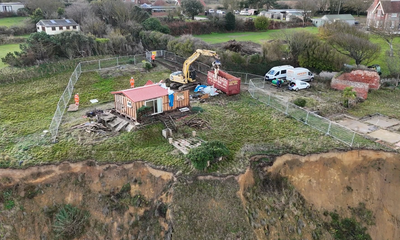

Clifftop home demolished before it can fall into sea
The property had been designated as an “immediate risk” of plunging into the sea in Trimingham, Norfolk.

 Holidays3 days ago
Why the holidays would fall apart without eldest daughters

 Pets3 days ago
Dog has emergency surgery after eating battery mistaken for treat

 Tech2 days ago
Nearly half of AI users let chatbots change their minds

 Health3 days ago
What caregivers should know about this common heart issue
 Life2 days ago
‘Left for dead’ after being mowed down in e-scooter hit-and-run

 Holidays2 days ago
Holiday hustle threatens Americans’ hopes for rest

 Auctions2 days ago
Rare Aston Martin owned by real ‘James Bond’ worth over half a million

 Holidays14 hours ago
No. 1 threat that could ruin a holiday road trip?
