
Nearly 20% of Americans have never received flowers from their partner


If you’re unsure whether your partner prefers roses, tulips or sunflowers, it may be time to ask. One in four Americans doesn’t know their partner’s favorite flower.
A new survey of 2,000 Americans looked at the role flowers play for people both in their romantic lives and beyond.
Results showed just a quarter (24%) of those in relationships who think their partner has a favorite flower are actually able to name their loved one’s preferred bloom.
The survey conducted by Talker Research on behalf of BloomsyBox also found a similar number (22%) of those in relationships don’t know what their partner’s favorite flower even looks like.

The results suggest many romantics may need to engage their partner’s flowery side a little more when trying to impress, but findings showed they’re also very prominent in apology.
Nearly three in four (73%) said they'd accept flowers as a way to make up for missteps, the top ones including saying something hurtful, forgetting a special date and showing up late.
A forgiving portion of respondents even said flowers help them more easily forgive a partner missing special dates like Valentine's Day (29%) or a birthday (28%).
"Flowers have long been a symbol of love and appreciation, but it's clear that in modern relationships, they serve as much more,” said Juan Palacio, CEO of BloomsyBox. “They’re a way to communicate emotions, repair missteps and show thoughtfulness, even when words fall short. Flowers remain a timeless way to strengthen connections and make everyday moments more meaningful."
A lucky quarter (25%) of those in relationships said they receive flowers monthly or more from their partner and a similar number (24%) receive them a few times a year.

Nearly a fifth (19%) sadly say they never receive flowers from their significant other.
However, when they do receive surprise flowers, the overwhelming majority of people feel loved (63%) or appreciated (41%). The survey also tested how well Americans could recognize popular blooms — with mixed results.
While most were able to correctly identify a sunflower (76%) or a rose (68%), fewer than four in 10 could name an orchid (38%), and just one in 10 recognized a ranunculus (9%), making it the least-identified flower overall.
While roses remain a top pick for older generations, younger Americans, particularly Gen Z and millennials, are leaning toward alternative blooms.
Gen Z showed a preference for tulips (21%) and sunflowers (11%), while millennials gravitated toward sunflowers (12%) and lilies (7%).
“Flowers have always been a timeless expression of love, but the survey highlights how they’ve evolved into a meaningful gesture for a range of occasions,” added Palacio. “It’s interesting to see how different generations use flowers to convey emotions, whether it's to show affection, express regret, or simply brighten someone’s day. Flowers remain one of the most personal and heartfelt ways to strengthen relationships.”

Survey methodology:
Talker Research surveyed 2,000 Americans; the survey was commissioned by BloomsyBox and administered and conducted online by Talker Research between Aug. 20 - Aug. 25, 2025.
We are sourcing from a non-probability frame and the two main sources we use are:
- Traditional online access panels — where respondents opt-in to take part in online market research for an incentive
- Programmatic — where respondents are online and are given the option to take part in a survey to receive a virtual incentive usually related to the online activity they are engaging in
Those who did not fit the specified sample were terminated from the survey. As the survey is fielded, dynamic online sampling is used, adjusting targeting to achieve the quotas specified as part of the sampling plan.
Regardless of which sources a respondent came from, they were directed to an Online Survey, where the survey was conducted in English; a link to the questionnaire can be shared upon request. Respondents were awarded points for completing the survey. These points have a small cash-equivalent monetary value.
Cells are only reported on for analysis if they have a minimum of 80 respondents, and statistical significance is calculated at the 95% level. Data is not weighted, but quotas and other parameters are put in place to reach the desired sample.
Interviews are excluded from the final analysis if they failed quality-checking measures. This includes:
- Speeders: Respondents who complete the survey in a time that is quicker than one-third of the median length of interview are disqualified as speeders
- Open ends: All verbatim responses (full open-ended questions as well as other please specify options) are checked for inappropriate or irrelevant text
- Bots: Captcha is enabled on surveys, which allows the research team to identify and disqualify bots
- Duplicates: Survey software has “deduping” based on digital fingerprinting, which ensures nobody is allowed to take the survey more than once
It is worth noting that this survey was only available to individuals with internet access, and the results may not be generalizable to those without internet access.
Stories and infographics by ‘Talker Research’ are available & ready to use. Stories and videos by ‘Talker News’ are managed by Talker Inc. For queries, please submit an inquiry via our contact form.


Man travels 1,300 miles to fish and catches ‘world record’ carp
The fisherman was left stunned when the giant carp took his bait.
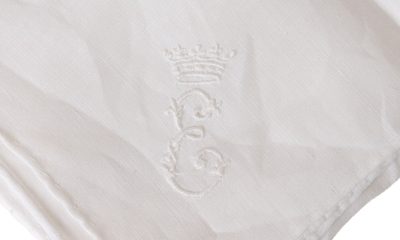

Queen Elizabeth II’s hanky and Wallis Simpson’s toothpick for sale
The cotton handkerchief made for the then-Princess Elizabeth in the late 1940s is expected to fetch up to $670.


Fiery tradition has people carry burning tar barrels through streets
This flaming historic tradition is a blazing barrel spectacle.


Scientist fighting to keep badger he saved from starvation
“I just want the right decision made for Harriet.”


Beavers return to part of Scotland for first time in 500 years
Beavers are back in the famous part of Scotland 500 years after they were hunted to extinction.

 Studies4 days ago
Is living near too much noise bad for you?

 Entertainment4 days ago
Original 1966 Batman No. 1 trading card sells for record price

 Money3 days ago
Six in 10 keep secret money from their partners

 Holidays4 days ago
How are Americans giving holiday traditions makeovers?

 Food & Drink4 days ago
Energy drinks linked to serious heart issues in young adults

 Life1 day ago
Is the ‘morning debrief’ more essential than the night out?

 Weird4 days ago
Man who studied Loch Ness Monster for 50 years: It doesn’t exist

 Good News4 days ago
Adventurer ends 28-year walk around the world
