
New visual shows Stonehenge’s construction as never seen before
It is thought the monument took around 1,500 years to build, from about 3100 B.C. to 1600 B.C.


By Dean Murray
A new visual reconstruction has revealed how Stonehenge was made in unprecedented detail.
The illustration, created for the English Heritage book "Stonehenge: The Story of an Icon," shows huge stones being transported to the Salisbury Plain site.
English Heritage produced the image based on laser scan data and archaeological research; the visual is the most accurate and detailed reconstruction ever made.
It is thought the monument took around 1,500 years to build, from about 3100 B.C. to 1600 B.C., with the illustration focusing on the main phase of construction, which took place around 2500 B.C.

Historians and archaeologists believe the stones were dragged on sleds, possibly over wooden tracks or logs, with ropes and large teams of people.
Once they reached the site, the uprights were probably set into pre-dug pits, tilted into position with levers and ropes, then packed in place with stones and earth.
English Heritage said: "More than 4,500 years ago Neolithic people chose a windswept plain in southern Britain as the site for a spectacular monument.
"Here, they brought huge stones from as far afield as southwest Wales and northeast Scotland to create a remarkable stone structure unlike anything that had been built before."
Stonehenge is probably the most famous prehistoric monument in the world, with more than 1 million people visiting every year.
Stories and infographics by ‘Talker Research’ are available & ready to use. Stories and videos by ‘Talker News’ are managed by Talker Inc. For queries, please submit an inquiry via our contact form.






Billionaire wins approval for 40-acre solar farm at historic estate
The plans for the huge solar farm were initially met with criticism from both neighbors and the local parish council.


Do dog owners who share beds with their pets sleep more soundly?
The nighttime movements of humans and their dogs were found to be "strongly correlated" in new research.
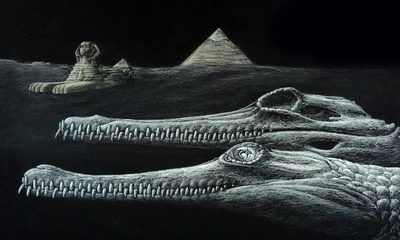

Ancient crocodile with missing snout named for Egyptian god
Scientists say Herugavialis cairensis was discovered in the same rocks used to build the Great Sphinx.


Bobcat returns to wild after being severely burned in California fire
The feline had first to third-degree burns across all four paws, acute kidney injury, severe emaciation and a heavy tick...


Thieves steal 1,000 pounds of grapes from vineyard
Award-winning Winbirri Vineyard produces Bacchus wine, often referred to as "England's Sauvignon Blanc," with an elderflower flavor.

 Studies1 day ago
Statin users less likely to need stronger treatment for glaucoma

 Sports3 days ago
Over a third of fans actually believe their rituals affect the game

 Uncategorized2 days ago
‘Super ice’ 10 times stronger, bends instead of shattering

 Music2 days ago
David Bowie’s ‘lifetime’ ban from venue lifted posthumously

 Work2 days ago
Seasonal workers need this much to make ends meet this holiday season

 Health1 day ago
Can bird-watching help stroke survivors speak again?

 Fashion & Beauty2 days ago
Guard gets modeling gig after going viral at London Fashion Week
- Animals6 hours ago
Do dog owners who share beds with their pets sleep more soundly?
