
Is quality as important as quantity when it comes to sleep?
Greater deep sleep was linked to lower risk of seven conditions, including Type 2 diabetes and major depressive disorder.


By Stephen Beech
Quality is just as important as quantity when it comes to healthy sleep, suggests new research.
Greater amounts of rapid eye movement (REM) and deep sleep are associated with lower risks of dozens of diseases, say scientists.
But less than five hours of total sleep per night is linked with higher risk of illness, according to the findings published in the journal PLOS Medicine.
The evidence also suggests that six to eight hours of sleep per night really is a "health safeguard" for middle-aged and older adults,
The study involving more than 95,000 British participants used wrist-worn accelerometer data to map associations between real-world sleep patterns and the incidence of more than 1,000 health conditions.

The findings showed greater REM sleep was associated with a lower risk of 83 health issues — including heart failure, dementia and Parkinson's disease.
Greater deep sleep was linked to lower risk of seven conditions, including Type 2 diabetes and major depressive disorder.
Greater sleep irregularity and wakefulness after sleep onset were each linked to higher risk of several conditions, including anxiety and substance use disorders.
The research was led by Shengzhi Sun of Capital Medical University in Beijing.
He said sleep quantity and quality is a priority of China's National Health Commission and a focus in China more broadly.
The most recent 2026 China Sleep Health White Paper found that while the average surveyed Chinese person sleeps 6.97 hours per night, 23% sleep less than six hours per night.

The same report noted that only 26% of respondents reported a consistent sleep schedule, and that disturbances to shut-eye have increased over time.
Sun says understanding how sleep patterns are linked to disease risk is therefore of great relevance.
He said: "There remains limited understanding of how sleep stages and other real-world sleep patterns relate to health outcomes.
"In part, that is because self-reported sleep measures often show poor correlation with objective assessments, making it difficult to capture real-world sleep patterns."
For the new study, researchers analyzed data from 95,559 UK Biobank participants who wore wrist accelerometers for seven consecutive days and nights.
The Chinese team used a deep-learning algorithm to calculate stages of REM, deep and light sleep, total sleep duration, wakefulness after sleep onset, and night-to-night sleep irregularity.
Participants were followed for an average of 8.9 years, and health records were available to test for associations with more than 1,000 different illnesses.
The findings also showed that there was no straightforward link between total sleep duration and the risk of many health issues.

The lowest risk concentrated in a six- to eight-hour sleep window.
People sleeping less than five hours faced the most elevated clinical vulnerability, with an increased risk of 37 conditions.
Bur Sun says, as an observational study, the research can't establish that sleep patterns directly cause disease risk.
He said: "The findings provide additional evidence supporting the role of a six to eight hours' sleep duration as a health safeguard for middle-aged and older adults, likely attributable to more favorable distributions of sleep stages.
"Maintaining a sleep duration of six to eight hours can effectively reduce the risk of multiple diseases, providing new insights for health promotion and preventive practice."
Sun added: "Sleep duration exhibited significant non-linear associations with 86 disease phenotypes, with the minimum-risk duration for the majority of these conditions, 69 phenotypes, precisely concentrated within a six- to eight-hour window."
Stories and infographics by ‘Talker Research’ are available & ready to use. Stories and videos by ‘Talker News’ are managed by Talker Inc. For queries, please submit an inquiry via our contact form.




Billionaire wins approval for 40-acre solar farm at historic estate
The plans for the huge solar farm were initially met with criticism from both neighbors and the local parish council.


Do dog owners who share beds with their pets sleep more soundly?
The nighttime movements of humans and their dogs were found to be "strongly correlated" in new research.
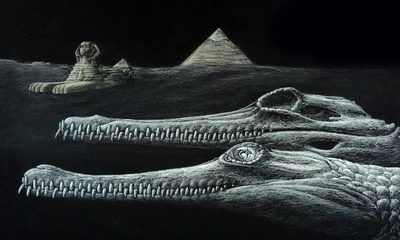

Ancient crocodile with missing snout named for Egyptian god
Scientists say Herugavialis cairensis was discovered in the same rocks used to build the Great Sphinx.


Bobcat returns to wild after being severely burned in California fire
The feline had first to third-degree burns across all four paws, acute kidney injury, severe emaciation and a heavy tick...


Thieves steal 1,000 pounds of grapes from vineyard
Award-winning Winbirri Vineyard produces Bacchus wine, often referred to as "England's Sauvignon Blanc," with an elderflower flavor.

 Studies1 day ago
Statin users less likely to need stronger treatment for glaucoma

 Sports2 days ago
Over a third of fans actually believe their rituals affect the game

 Uncategorized2 days ago
‘Super ice’ 10 times stronger, bends instead of shattering

 Work1 day ago
Seasonal workers need this much to make ends meet this holiday season

 Music2 days ago
David Bowie’s ‘lifetime’ ban from venue lifted posthumously

 Health1 day ago
Can bird-watching help stroke survivors speak again?

 Fashion & Beauty2 days ago
Guard gets modeling gig after going viral at London Fashion Week

 Weird2 days ago
Aerial photos reveal abandoned theme park reclaimed by nature
