
Six in 10 keep secret money from their partners


Six in ten Americans have a “financial secret” they’ve hidden from others, according to new research.
The new survey of 2,000 Americans found that 59% admit to keeping some sort of financial secret, with 11% admitting they keep a separate bank account their partner doesn’t know about.
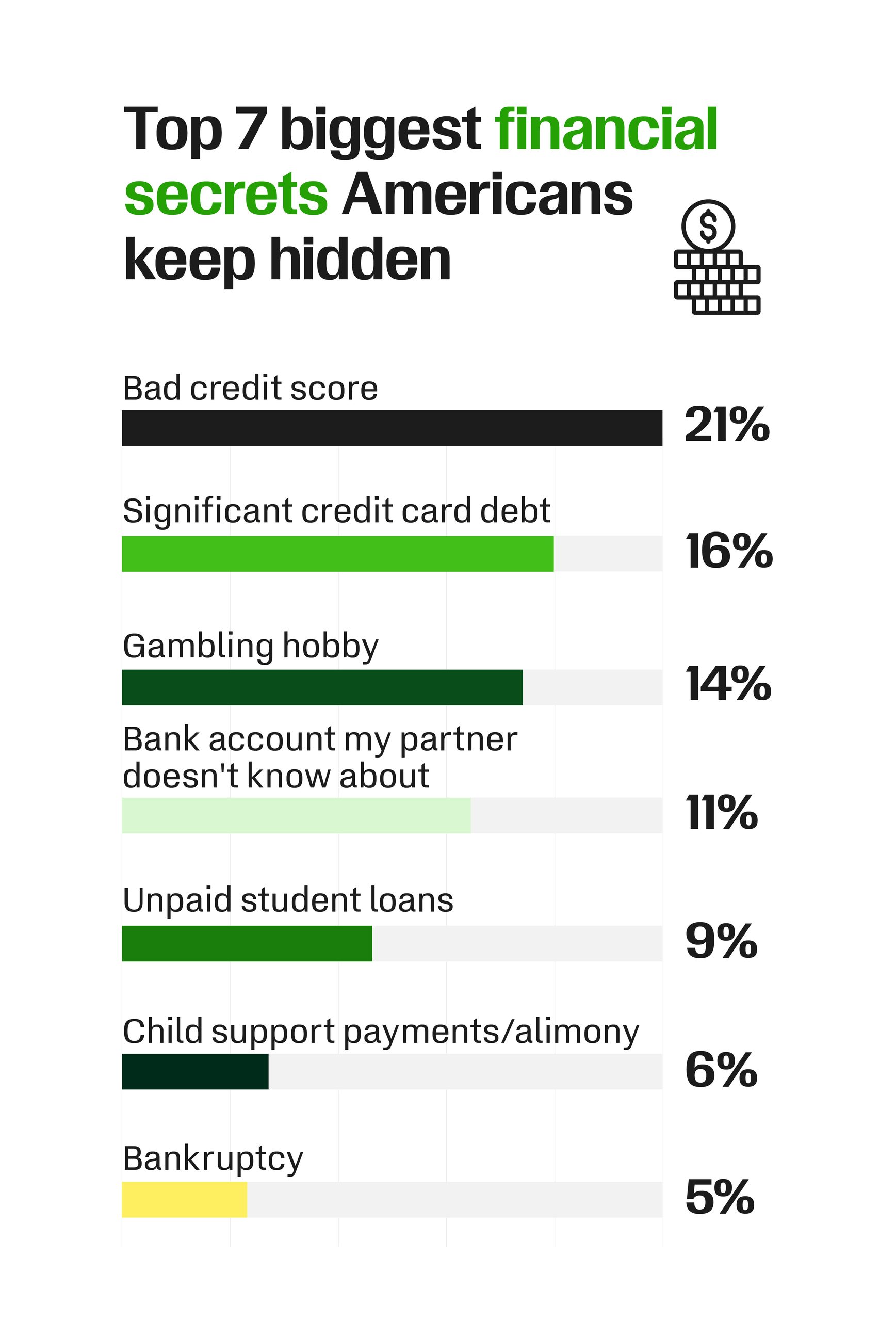
One in five (21%) say they secretly have a bad credit score, 16% silently struggle with significant credit card debt, and 14% even keep their gambling habits from loved ones.
Three in 10 respondents (30%) admitted hiding a purchase or financial decision from a spouse, partner or family member, while nearly one-quarter (23%) said someone close to them had hidden one from them.
The study, conducted by Talker Research on behalf of TD Bank U.S., also found that money matters when it comes to dating.
Financial stability is a key consideration for many Americans when looking for something serious, with 72% citing it as important in a partner. That includes 41% who said it is very important that a partner be financially stable and able to help support the household when needed.
Only 6% of all those polled said they don’t consider a potential partner’s financial situation at all when deciding whether or not to continue the relationship.
Nearly half of Americans (46%) said someone’s debt or financial habits would impact their willingness to pursue a relationship.
Interestingly, younger Americans were more likely to feel this way, with millennials (51%) and Gen Z (49%) being much more likely to agree than Gen X (39%) and baby boomer respondents (39%).
Most Americans believe couples should combine their finances at some point, but the data revealed there’s some disagreement about when that should happen. Thirty percent say marriage is the right time, while 13% say finances should be combined after moving in together and 12% believe it is appropriate while seriously dating.
However, 13% say couples should skip it entirely and keep their money completely separate.

The survey also found that more than half of respondents (54%) said they would consider signing a prenuptial agreement before tying the knot.
“The survey suggests money isn't just influencing financial decisions; it's influencing relationship dynamics, major life milestones and overall confidence," said Marc Womack, Head of Client Experience, Strategy and Governance, TD Bank U.S. "Financial education and planning may help people better navigate these pressures, have more productive conversations and make more informed decisions about their future.”
The survey also aimed to understand the financial confidence of everyday Americans and found that many are leaning on family and loved ones for support.
Sixty-seven percent of those surveyed said they’ve received financial assistance in some way from loved ones.
Of those, a quarter (24%) have gotten support on everyday bills, 21% on emergency bills, 15% on debt payments, and 15% on rent/mortgage payments.

Younger generations were the most likely to have received some financial help, with 77% of Gen Z and 71% of millennials saying they’ve benefited from this, compared with 60% of Gen X and 45% of baby boomers.
The average respondent has taken in $12,252 in financial support since becoming financially independent. However, nearly a third (31%) of those who received help said they received less than $1,000, while 17% have gotten $25,000 or more over time.
But financial support isn’t a one-way street. Seven in 10 respondents (71%) said they have also provided financial assistance to a family member or someone close to them, most often to help cover everyday expenses (28%), emergencies (24%) and housing-related costs (15%).
“Whether it's navigating financial conversations with a partner, reaching a major life milestone or leaning on loved ones for support, confidence can be strengthened from understanding your financial situation and making informed decisions,” said Mandy Kelso, Head of Financial Education, TD Bank U.S. “The survey shows that while many Americans face real financial pressures, they're also focused on taking meaningful steps toward a stronger financial future.”

TOP 7 BIGGEST FINANCIAL SECRETS AMERICANS KEEP HIDDEN
- Bad credit score - 21%
- Significant credit card debt - 16%
- Gambling hobby - 14%
- Bank account my partner doesn't know about - 11%
- Unpaid student loans - 9%
- Child support payments/alimony - 6%
- Bankruptcy - 5%
Research methodology:
Talker Research surveyed 2,000 respondents, with 250 in NYC, Boston, Miami, Philadelphia, Charlotte and Washington, D.C., and 500 general population respondents who have access to the internet; the survey was commissioned by TD Bank U.S. and administered and conducted online by Talker Research between June 29 and July 13, 2026. A link to the questionnaire can be found here.
To view the complete methodology as part of AAPOR’s Transparency Initiative, please visit the Talker Research Process and Methodology page.
Stories and infographics by ‘Talker Research’ are available & ready to use. Stories and videos by ‘Talker News’ are managed by Talker Inc. For queries, please submit an inquiry via our contact form.



Paperwork for Princess Diana’s funeral hearse up for auction
The DS420 hearse, operated by Leverton & Sons, transported the princess from Westminster Abbey to Northamptonshire as millions around the...


Giant great white shark being tracked surfaces near Atlantic City
The expert hunter is heading south after spending the warmer summer months in the Atlantic off the coast of Canada.


Study warns eating fatty foods may increase colon cancer risk
Scientists say consuming a high-fat diet leaves “lasting changes” in intestinal stem cells that can increase the chance of tumors...


Deep space system emitting signals every 8 minutes discovered
It is the first time radio pulses have been detected from a white dwarf orbiting a sun-like star.


Irregular sleep linked to worse anxiety and depression
A new study found disrupting the body’s natural clock can affect a person's mental health.

 Science2 days ago
Arsenic in Arctic ice traced to century-old Montana copper mine

 Holidays3 days ago
Questions nobody wants to be asked at a holiday party?

 Money3 days ago
More money, more problems? Study finds if money = happiness

 Tech20 hours ago
Shape-shifting bots inspired by elephant trunks can bend and grab

 Work2 days ago
AI and 4-day weeks? What future work may look like

 Holidays2 days ago
Hosts spend more time cleaning than having fun

 Parenting1 day ago
Do teens know money better than their parents?

 Parenting1 day ago
Kids who go to parks grow up with better mental health?
